.png&w=1920&q=75)
Medical
Paramedical
Engineering
Pharmacy
Nursing
Management
Diploma
Science
Law
Study Abroad
Admissions open 2026-27
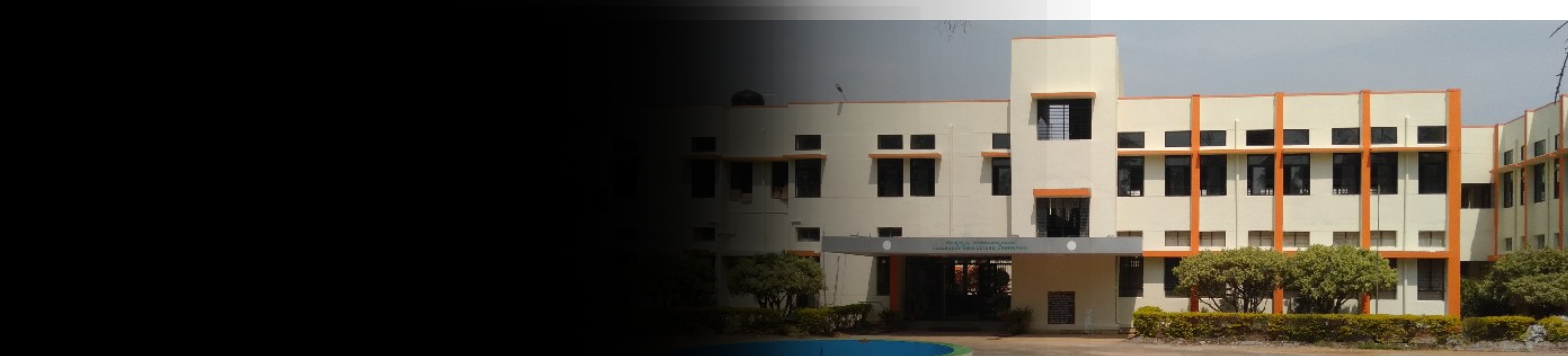
College Of Sericulture Chintamani
University of Agricultural Sciences,Science
Chintamani Rd, Kolar, India
CUT OFF
| Courses | Fees | CutOff / Eligibility Criteria |
|---|---|---|
| B.Sc. (Hons.) Agriculture | 3L | 55% |
| B.Sc. (Hons.) Sericulture | 3L | 55% |
Introduction
This college serves as a focal point where numerous students, who wish to have a chance to get a job in these spheres, come to. Admission to this institution is competitive, and the College of Sericulture Cutoff plays a significant role in determining who gets admitted.
Factors Influencing the Cutoff
Several factors influence the cutoff for admission to the College of Sericulture, Chintamani. Understanding these factors can help students better prepare for the admission process:
1. Number of Applicants
The number of students applying for a particular course has a direct impact on the cutoff. If there is a high number of applicants for limited seats, the cutoff tends to rise. Conversely, if fewer students apply, the cutoff may be lower.
In recent years it has involved more and more people, the crusade of the silk industry, and the need a skilled workers in agriculture and sericulture to boost the number of applications.
2. Difficulty Level of Entrance Exam
The difficulty level of the entrance exam, whether it is KCET or ICAR AIEEA, plays a significant role in determining the cutoff. If the exam is more challenging in a given year, the overall performance of students might be lower, resulting in a lower cutoff. Conversely, if the exam is relatively easier, the cutoff tends to rise due to higher scores.
Both KCET and ICAR AIEEA are known for their rigorous testing in subjects like Physics, Chemistry, Biology, and Mathematics, which form the basis of the cutoff.
3. Category of the Candidate
Like most educational institutions in India, the College of Sericulture follows the reservation system mandated by the government. This means that students from reserved categories (SC/ST/OBC) often have lower cutoffs compared to students from the general category.
The exact relaxation in cutoff marks varies depending on the reservation policy for that year and the number of seats allocated to each category.
4. Previous Year Cutoff Trends
The cutoff for the current academic year is also influenced by the cutoff trends from previous years. Institutions often analyze past data to make decisions about the expected cutoff range for a given year.
Understanding previous year cutoffs can give students an idea of what to expect and how competitive the admission process might be.
5. Availability of Seats
The number of seats available for a particular course plays a crucial role in determining the cutoff. For example, if the number of seats for B.Sc. (Hons.) Sericulture is limited, and there is a high demand for the course, so the cutoff will be higher.
On the other hand, if the college expands its intake capacity or if fewer students apply for a particular program, the cutoff may decrease.
Visit our website for more information on College of Sericulture cutoff marks.
College of Sericulture Cutoff and Entrance Exams
1. Karnataka Common Entrance Test (KCET)
The Karnataka Common Entrance Test (KCET) is the most important entrance exam for students seeking admission to the College of Sericulture, Chintamani. KCET is a state-level examination through which the Karnataka Examinations Authority (KEA) provides admissions for Students across Karnataka into various undergraduate courses including Agricultural Science.
Subjects Covered: KCET tests students on Physics, Chemistry, and Biology/Mathematics based on the 10+2 syllabus.
Score Calculation: The exam consists of multiple-choice questions, and marks are awarded based on correct answers. There is no negative marking.
Weightage: In most cases, 50% weightage is given to KCET marks, and 50% weightage is given to marks obtained in the qualifying exam (10+2 or equivalent).
The KCET cutoff for admission to the College of Sericulture varies each year, depending on the factors discussed earlier. Generally, students need to score well in KCET to secure admission, especially in competitive programs like B.Sc. (Hons.) Agriculture.
2. ICAR AIEEA (Indian Council of Agricultural Research All India Entrance Examination)
For students from other states or those seeking admission through national-level exams, the ICAR AIEEA is another important entrance test. ICAR AIEEA is conducted by the Indian Council of Agricultural Research (ICAR) for admission to agricultural universities across India, including the College of Sericulture, Chintamani.
Subjects Covered: ICAR AIEEA tests students in Physics, Chemistry, Biology/Agriculture, and Mathematics.
Score Calculation: ICAR AIEEA follows a similar multiple-choice format, with negative markings for incorrect answers.
Cutoff: The cutoff for ICAR AIEEA varies depending on the performance of candidates at the national level. For courses like B.Sc. (Hons.) Agriculture, the cutoff tends to be highly competitive.
3. Other Entrance Exams
Some students may be eligible for admission based on other state or national-level entrance exams, depending on the policies of the university or the college. However, KCET and ICAR AIEEA are the most commonly accepted exams for admission to the College of Sericulture.
Determining the Cutoff
The cutoff for the College of Sericulture, Chintamani, is determined through a combination of factors, including:
Total number of applicants.
Performance of applicants in the entrance exam (KCET or ICAR AIEEA).
Reservation policy.
Availability of seats in the desired program.
Previous year’s cutoff trends.
After the entrance exam results are declared, the Karnataka Examinations Authority (KEA) or the relevant authorities (in the case of ICAR AIEEA) will release the cutoff ranks for various courses and categories. Students who meet the cutoff are eligible for counseling and seat allotment.
To get full details on the cutoff, click here College of Sericulture cutoff.
Reservation Policies and Cutoff Relaxation
In line with the government’s policies, the College of Sericulture follows a reservation system for admission. This provides relaxation in cutoff marks for students from certain categories, including:
Scheduled Castes (SC).
Scheduled Tribes (ST).
Other Backward Classes (OBC).
Economically Weaker Sections (EWS).
Persons with Disabilities (PWD).
The exact percentage of seats reserved for each category and the corresponding cutoff relaxation vary from year to year. Typically, students from SC/ST categories have lower cutoff marks than those from the general category. Additionally, women and candidates from rural areas may also be eligible for additional relaxation.
Previous Year Cutoff Trends
To give a clearer picture of how the cutoff has evolved, here is a general overview of the cutoff trends from recent years for the College of Sericulture’s popular courses:
B.Sc. (Hons.) Sericulture
General Category: KCET ranks between 15,000 to 25,000.
OBC Category: KCET ranks between 20,000 to 35,000.
SC/ST Category: KCET ranks between 35,000 to 50,000.
B.Sc. (Hons.) Agriculture
General Category: KCET ranks between 8,000 to 15,000.
OBC Category: KCET ranks between 12,000 to 25,000.
SC/ST Category: KCET ranks between 25,000 to 40,000.
These are approximate figures, and actual cutoff ranks may vary each year depending on the number of applicants, their performance, and other influencing factors.
Counseling and Seat Allotment
Once the cutoff is released, students who meet the required cutoff are called for the counseling process. The counseling is typically conducted by the Karnataka Examinations Authority (KEA) or the relevant authorities for national-level exams like ICAR AIEEA. During the counseling process:
Seat allocation is based on the candidate's rank, category, and preference of course.
Document verification is carried out to ensure that the student meets all eligibility criteria.
Candidates are required to pay the admission fees to confirm their seat after successful allocation.
Get detailed information on our website, College of Sericulture cutoff percentage.
Conclusion
The College of Sericulture cutoff is an essential factor in the admission process, determining which students gain entry to the highly competitive programs offered by the college. With increasing interest in sericulture and agriculture careers, the cutoff has become more competitive over the years.
Get College Name, District
Admission Form 2026
More About
Info
Courses & Fees
Admission
Placements
Scholarship
Gallery
Facility
Review
Q & A
Students Also Visited

College Name
Admissions Open for All Courses 2026
Visit Us
Basavanagudi, Bengaluru
Karnataka - 560004
.png)
GetMyCollege
India's most trusted college admission platform. Join thousands of students who found their dream college with expert guidance.
Company
About Us
Compare Colleges
Contact Us
Privacy Policy
Terms & Conditions
Ready to Find Your Dream College?
Free counselling available — no registration required
Top Colleges
RV Institute of Technology and Management
PES College of Engineering
BMS Institute of Technology and Management
Dayananda Sagar Institute of Technology
BNM Institute of Technology
Sir M Visvesvaraya Institute Of Technology
RNS Institute of Technology
Top Streams
Medical
Para Medical
Engineering
Nursing
LLB
Science
Arts & Design
Diploma
Pharmacy
Commerce
IT
Study Abroad
🇨🇦 Canada
🇸🇪 Sweden
🇦🇺 Australia
🇩🇪 Germany
🇬🇧 UK
🇺🇸 USA
🇫🇷 France
🇨🇳 China
🇦🇪 UAE
🇮🇹 Italy
🇳🇿 New Zealand
Articles
Pre University Result
PU College Admissions 2026
CBSE 10th Exam Syllabus
Best PU Colleges in Bangalore
JEE, NEET with PU Colleges
Why BBA after 12th
Engineering Revaluation Complete Guide
Top Residential PU Colleges in Bangalore
Copyright © 2026
GetMyCollege.com.
All Rights Reserved.