.png&w=1920&q=75)
Medical
Paramedical
Engineering
Pharmacy
Nursing
Management
Diploma
Science
Law
Study Abroad

Admissions open 2026-27
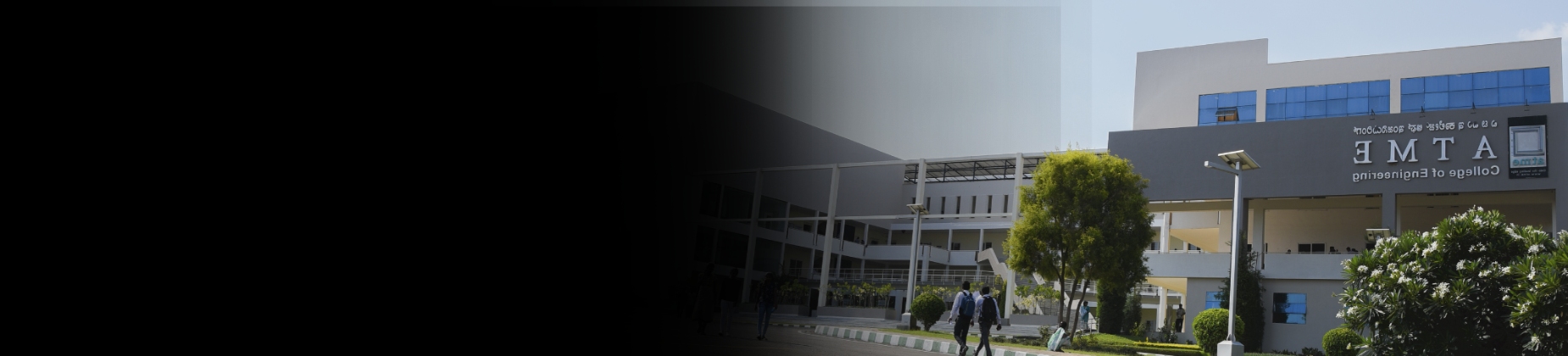
ATME College of Engineering
Visvesvaraya Technological University (VTU),Engineering
Kanakapura, Mysore, India
COURSES & FEES
| Courses | Fees | CutOff / Eligibility Criteria | Action |
|---|---|---|---|
| Civil Engineering | ₹4.1L | 75,000 | Apply Now |
| Computer Science and Engineering | ₹4.1L | 32,617 | Apply Now |
| Computer Science and Engineering - Data Science | ₹4.1L | 50,889 | Apply Now |
| Computer Science and Engineering (Artificial Intelligence and Machine Learning) | ₹4.1L | 40,395 | Apply Now |
| BE- Computer Science & Design | ₹4.1L | 68,655 | Apply Now |
| Computer Science and Engineering - Cyber Security | ₹4.1L | 44,103 | Apply Now |
| Electronics & Communication Engineering | ₹4.1L | 49,294 | Apply Now |
| Electrical and Electronics Engineering | ₹4.1L | 34,916 | Apply Now |
| Master in Computer application (MCA) | ₹3.2L | 45,120 | Apply Now |
ATME College of Engineering Fee Structureis that of a leading technical institution located in Mysuru which is concerned with the education of engineers and innovators. The campus facilities are influenced by a modern architectural design that aids in creating a favorable learning atmosphere for students of various backgrounds and geographical locations.
ATME College of Engineering Fee Structure
The institution provides a wide variety of facilities that are intended to assist the academic development and comprehensive growth of all students in the various departments. The modern laboratories that are up to date with the latest equipment enable the students to do practical experiments and have hands-on learning which are so important for the understanding of the difficult engineering concepts and theories.
Civil Engineering Excellence
The department gives priority to the preservation of structural integrity and the use of sustainable building practices to train students able to design and build safe and long-lasting infrastructures for coming urban areas and smart cities.
The curriculum also has specialized software training by means of which students can learn to use programs such as AutoCAD and Revit, and thus be able to do digital drafting and 3D modeling according to the requirements of modern architecture.
Moreover, environmental engineering modules are continually informing the students about the water treatment and waste management systems, which are essential in keeping the ecological balance with the expanding industrial and residential zones.
Mechanical Engineering Insights
All elements of the robotics and automation training are presented to the students that provide them the opportunity to construct and manage cutting-edge robotic arms and automated production lines that are operating in modern factories.
Computer-Aided Manufacturing (CAM) techniques are taught to bridge the gap between theoretical design and the actual production of high-precision components for various mechanical applications and tools.
Electronics and Communication Systems
Digital signal processing methods are investigated to make it easier for students to elevate the quality of audio and video streams in telecommunications and multimedia broadcasting sectors and services.
Network security and cryptography are integrated into the lessons to ensure that future engineers can protect sensitive data and communication channels from cyber threats and unauthorized access.
Computer Science and Design
The students receive an introduction to the intricate algorithms and data structures that constitute the foundation of today's software development and the computational processing of large-scale enterprise applications and platforms in a more efficient way.
The very foundation of Artificial Intelligence and Machine Learning is erected on the ability of systems to perform in-depth analysis of data and to take independent decisions during the same time through the exploration of these technologies.
The modules of web development and cloud computing train students to create digital infrastructures which are scalable and that have the potential to meet the increasing demands of the global sectors of e-commerce and social media.
Data Science Specialization
The purpose of the track is to give organizations the ability to take advantage of the unstructured data that is collected through various digital channels by applying big data analytics and statistical modeling thus getting insights that are of great value.
Database management systems are being extensively studied so as to ensure that the students will be able to design and maintain the safe and efficient storage solutions for the sensitive data and records of the organization.
Artificial Intelligence Focus
AI ethics forms an important topic that pushes the pupils to think about the social effects of the self-governing technologies and the necessity of justice and openness in the algorithms' crafting.
Natural Language Processing (NLP) is the key technology that makes possible the existence of chatbots and virtual assistants with human-like communication skills, which can take care of customer requests and furnish information.
Library and Resource Center
There are quiet study areas and rooms for group work in the facility to support the personal focus and coworker chats necessary for difficult engineering projects and students teaching each other.
Digital repositories allow students to access previous thesis papers and project reports to gain inspiration and technical guidance for their own final year submissions and research papers.
Librarians who are skilled professionals are available to help learners in the search of intricate databases and locating the academic literature most pertinent to their engineering interest and studies.
Career Guidance and Placements
To assist students in developing the necessary confidence to perform well in recruitment drives with leading companies, the placement cell frequently conducts mock interviews and soft skills training sessions.
Internships are facilitated through partnerships with various manufacturing and IT firms, giving students the opportunity to gain valuable work experience before they officially graduate from college.
Campus Infrastructure and Life
Modern hostels with all necessary amenities to provide a comfortable and safe living environment for outstation students coming from different parts of the country are featured on the campus.
A well-furnished cafeteria offers nutritious food and snacks and also provides the students with an area to meet and mingle during the intervals of lectures thus turning it into a source of comfort and relaxation.
In this way, all the day students and the staff are able to commute easily and securely.
For more details, visit here :ATME College of Engineering Fee Structure
ATME College of Engineering Courses
ATME College of Engineering Courses are thoughtfully designed to align with the current demands of the global engineering industry and the rapid evolution of technology.
Foundational Science Modules
Physics for engineers delves into the fundamental concepts of mechanics and electromagnetism, which are necessary for comprehending the interaction of physical forces with different built structures and electrical parts.
Chemistry classes concentrate on the characteristics of materials and the reactions between them which are essential for the students of civil and mechanical engineering where materials' lifespan and composition are the main questions.
calculus and linear algebra which give the necessary computational tools for the engineering equations to be solved, and for the drawing up of the real-world physical systems and phenomena.
Professional communication skills are integrated into the first year to ensure that students can effectively articulate their ideas and technical findings in both written reports and oral presentations.
Core Engineering Subjects
The study of thermodynamics delves into the principles of energy and heat transfer, which are essential for the design of efficient engines and thermal power systems employed in a wide range of industrial and household applications.
Strength of materials teaches students how to calculate the stress and strain on different structures to prevent mechanical failure and ensure the safety of buildings and machinery.
Fluid mechanics covers the behavior of liquids and gases at rest and in motion which is critical for designing hydraulic systems and aerodynamic components for aircraft and vehicles.
Advanced Technical Electives
The Internet of Things (IoT) electives instruct the students about connecting the physical devices to the internet for the purpose of monitoring and collecting data remotely in the smart homes and industrial automation systems.
Renewable energy systems mainly rely on solar and wind power technologies that are getting more and more important as the world is turning to sustainable energy sources and is decreasing the carbon emissions.
The VLSI testing and verification modules training impart to the students the competence to guarantee that the performance and reliability of intricate integrated circuits are up to the mark before their commercial production.
Practical Laboratory Sessions
Electronics labs allow students to build and test circuits using breadboards and oscilloscopes to verify the theoretical concepts learned in their analog and digital electronics lectures and seminars.
Civil engineering labs feature equipment for testing the compressive strength of concrete and the tensile strength of steel bars used in various construction and infrastructure projects.
Project Management Training
Students learn how to create detailed project timelines and budgets to ensure that engineering tasks are completed on time and within the allocated financial resources and constraints.
Quality control methods such as Six Sigma are presented to students as a means to grasp the essentiality of reduction in defects and enhancement of efficiency in large-scale manufacturing and production processes.
Leadership and team coordination skills are brought out through group projects where students have to work together efficiently to reach a common goal and overcome difficult technical issues.
Environmental and Ethical Studies
The sustainability modules instruct learners in the design of environment-friendly structures and systems with the least possible adverse effect on nature as well as the saving of natural resources for the use of future generations and communities.
Engineering ethics explores the moral responsibilities of professionals and the importance of maintaining integrity and honesty in all technical and business dealings and interactions with clients.
Software Engineering Practices
Agile and Scrum methodologies are part of the training given to students to get them ready for the rapid and dynamic steps of contemporary software development where the practices of the industry include iterative testing and regular updates.
In the software testing and quality assurance modules, the intention is primarily to find and fix imperfections in the products so as to make them trustworthy and acceptable to the end-users and the clients' demands.
At first, students learn through discussions on the principles of UI/UX design and their application in the creation of user-friendly and nicely presented mobile applications and websites interfaces, which, as a result, make the entire user experience and interaction more enriched and vibrant.
Solving the architectural problems in software context allows the students to come up with the design of a strong and scalable system that can support the enormous data flow and the large number of simultaneous users without failing.
Industry Integrated Projects
Students in their final year usually team up with nearby industries for their projects and help solve real life technical problems which the companies in the engineering and technology sectors are facing.
Students must document their findings in a comprehensive thesis and present their work to a panel of experts during a final viva voce examination and technical demonstration session.
Seminar and Research Work
Research methodology workshops teach students how to conduct literature reviews and design experiments that yield scientifically valid and reproducible results for their academic papers and studies.
The students are encouraged to partake in national and international conferences so as to be exposed to the world engineering community and informed about the latest scientific advances and trends.
Inter-departmental collaborative research projects are actively supported in order to stir an interdisciplinary approach to tackling the tough problems that need the know-how of multiple engineering fields and domains.
Internship and Field Visits
Industrial visits to manufacturing plants and power stations are organized to give students a firsthand look at how large-scale engineering operations are managed and maintained in the real world.
Internships act as a connector between the learning environment and the professional one, giving the students a chance to use their theoretical knowledge in a practical scenario and at the same time creating a network of industry relationships.
For more details, visit here : ATME College of Engineering Courses
ATME College of Engineering Fees
Students and their families need to recognize the financial engagement that comes with an engineering education in order to make proper arrangements for a successful academic experience and a career in the future. The total fee for this university's educational services is being set up to be in competition with the lowest rates while evidencing the available moneys to provide high standards of teaching and modern facilities.
Tuition Cost Structure
The annual tuition fees cover the cost of academic instruction and access to all departmental laboratories and computer facilities required for the specific engineering branch chosen by the student.
To avoid any hidden costs or surprise expenses the college provides a detailed breakdown of charges in the admission process thus maintaining transparency in its fee structure.
Hostel and Accommodation
Mess charges are typically included in the hostel fee or billed separately to cover the cost of three nutritious meals a day served in the common dining area for all residents.
Security deposits are often required at the time of admission to the hostel and are generally refundable at the end of the academic year after deducting any applicable maintenance charges.
Different types of rooms ranging from shared dormitories to twin-sharing units are available at different price points to suit the varied financial preferences and needs of the students.
Examination and Academic Fees
University examination fees are collected each semester to cover the costs of conducting assessments and processing results and issuing official transcripts and degree certificates to the students.
Laboratory maintenance fees are utilized to upgrade equipment and purchase consumables like chemicals and electronic components needed for regular practical sessions and experimental work in different departments.
Admission and Registration
Enrollment fees are paid to the affiliating university to register the student as an official candidate for the degree program and to ensure eligibility for all university-level activities.
Identity card and documentation fees are collected to provide students with official campus credentials and to maintain their personal files throughout the duration of their four-year engineering course.
Alumni association fees may be collected at the time of graduation to help students stay connected with the institution and access various networking and career support services in the future.
Transportation Service Charges
This fee is responsible for the upkeep of the whole bus fleet and for the money paid to the professional drivers who make sure the students are at the college safely and on time every day.
The transportation fee is usually paid at the beginning of each academic year and is non-refundable once the student has registered for the service for that particular semester or term.
Skill Development Fees
Placement training fees cover the cost of organizing mock interviews and aptitude tests and bringing in external experts to coach students on how to navigate the recruitment process.
Innovation and entrepreneurship workshop fees support the activities of the college's incubation center, helping students turn their creative ideas into viable business plans and prototypes for new products.
Miscellaneous Campus Costs
The fees for sports and culture are taken to sponsor different inter-college events and festivals which are organized during the entire academic year to encourage students' talents and participation in extra-curricular activities.
The student welfare fund is utilized to support students in times of crisis and also funded numerous student drives for enhancing general campus life quality.
Scholarship and Aid
State and central government scholarships are facilitated through the college's administrative office, helping eligible students apply for and receive the financial support they are entitled to by law.
Students who are outstanding in certain engineering fields or show significant promise as future leaders in the technology and industrial sectors are sometimes offered corporate-sponsored scholarships.
Refund and Withdrawal
Processing fees are usually deducted from the total amount paid, and the remaining balance is returned to the student or their guardian according to the established institutional guidelines.
After the expiration of the refund period, the institution usually does not reimburse any amounts received as the spot will not be occupied by another student for that specific academic year.
Thoroughly explaining the refund process and telling which documents are needed can be done by the accounts and administrative office of the college during the regular working hours and days.
Laptop and Digital Tools
Students are often encouraged to purchase their own high-performance laptops that are capable of running the complex engineering software required for their specific branch of study and projects.
Some departments may offer bulk purchase options or tie-ups with electronics retailers to help students acquire the necessary hardware at a discounted price or through easy installment plans.
Fees for access to specialized online learning platforms and digital libraries may be included in the annual academic charges to provide students with 24/7 access to educational content and tools.
Fee Structure Summary Table
For more details, visit here :ATME College of Engineering Fees
Conclusion
The ATME College of Engineering Fee Structure is set to be very reasonable. It keeps its position as a preferred place among students due to the offering of different courses and facilities. Be sure to liaise with the administration to get the latest information regarding fees and admissions.
Get College Name, District
Admission Form 2026
More About
Info
Admission
Cutoff
Placements
Scholarship
Gallery
Facility
Review
Q & A
Students Also Visited

College Name
Admissions Open for All Courses 2026
Visit Us
Basavanagudi, Bengaluru
Karnataka - 560004
.png)
GetMyCollege
India's most trusted college admission platform. Join thousands of students who found their dream college with expert guidance.
Company
About Us
Compare Colleges
Contact Us
Privacy Policy
Terms & Conditions
Ready to Find Your Dream College?
Free counselling available — no registration required
Top Colleges
RV Institute of Technology and Management
PES College of Engineering
BMS Institute of Technology and Management
Dayananda Sagar Institute of Technology
BNM Institute of Technology
Sir M Visvesvaraya Institute Of Technology
RNS Institute of Technology
Top Streams
Medical
Para Medical
Engineering
Nursing
LLB
Science
Arts & Design
Diploma
Pharmacy
Commerce
IT
Study Abroad
🇨🇦 Canada
🇸🇪 Sweden
🇦🇺 Australia
🇩🇪 Germany
🇬🇧 UK
🇺🇸 USA
🇫🇷 France
🇨🇳 China
🇦🇪 UAE
🇮🇹 Italy
🇳🇿 New Zealand
Articles
Pre University Result
PU College Admissions 2026
CBSE 10th Exam Syllabus
Best PU Colleges in Bangalore
JEE, NEET with PU Colleges
Why BBA after 12th
Engineering Revaluation Complete Guide
Top Residential PU Colleges in Bangalore
Copyright © 2026
GetMyCollege.com.
All Rights Reserved.